
Biome
Araucaria
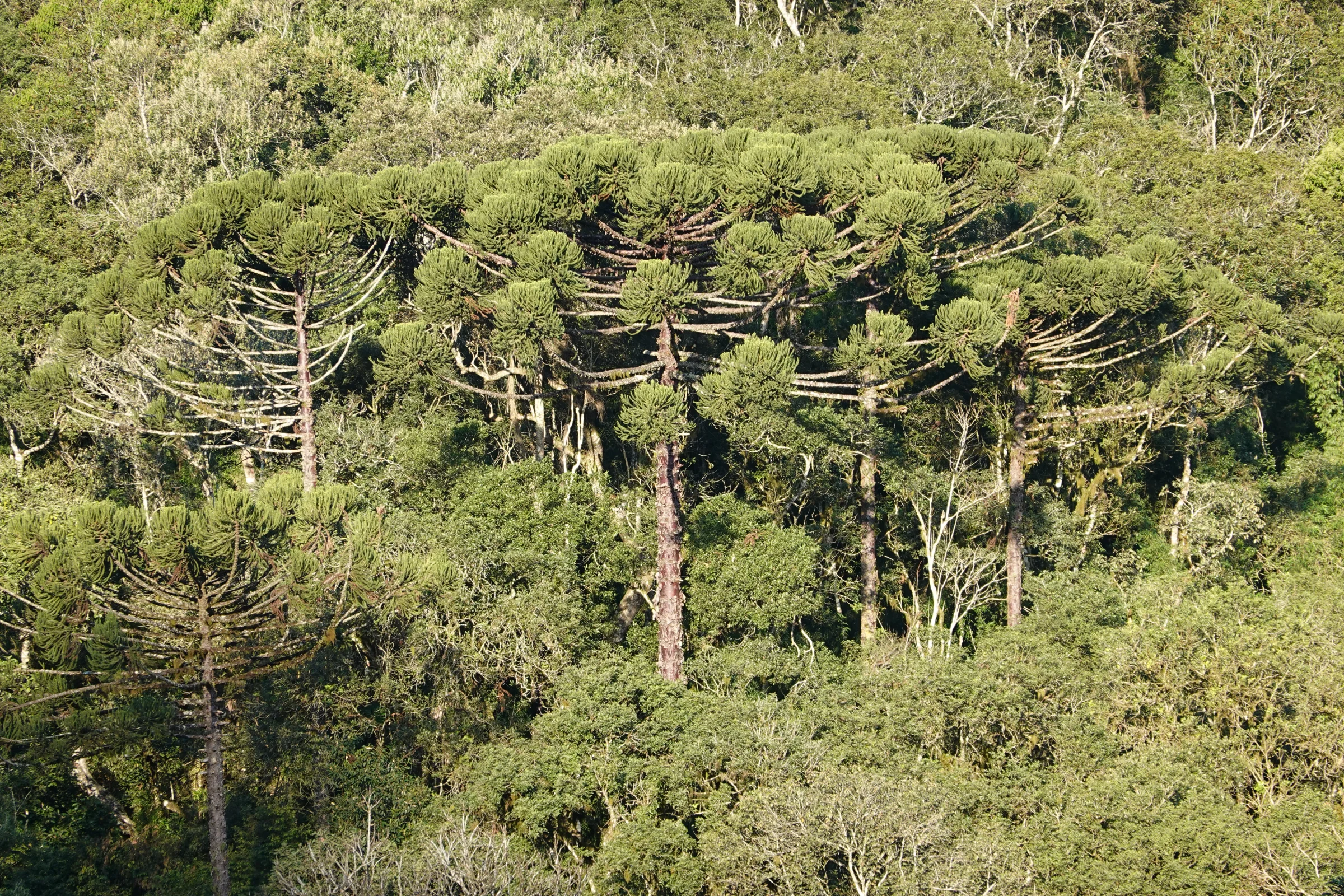
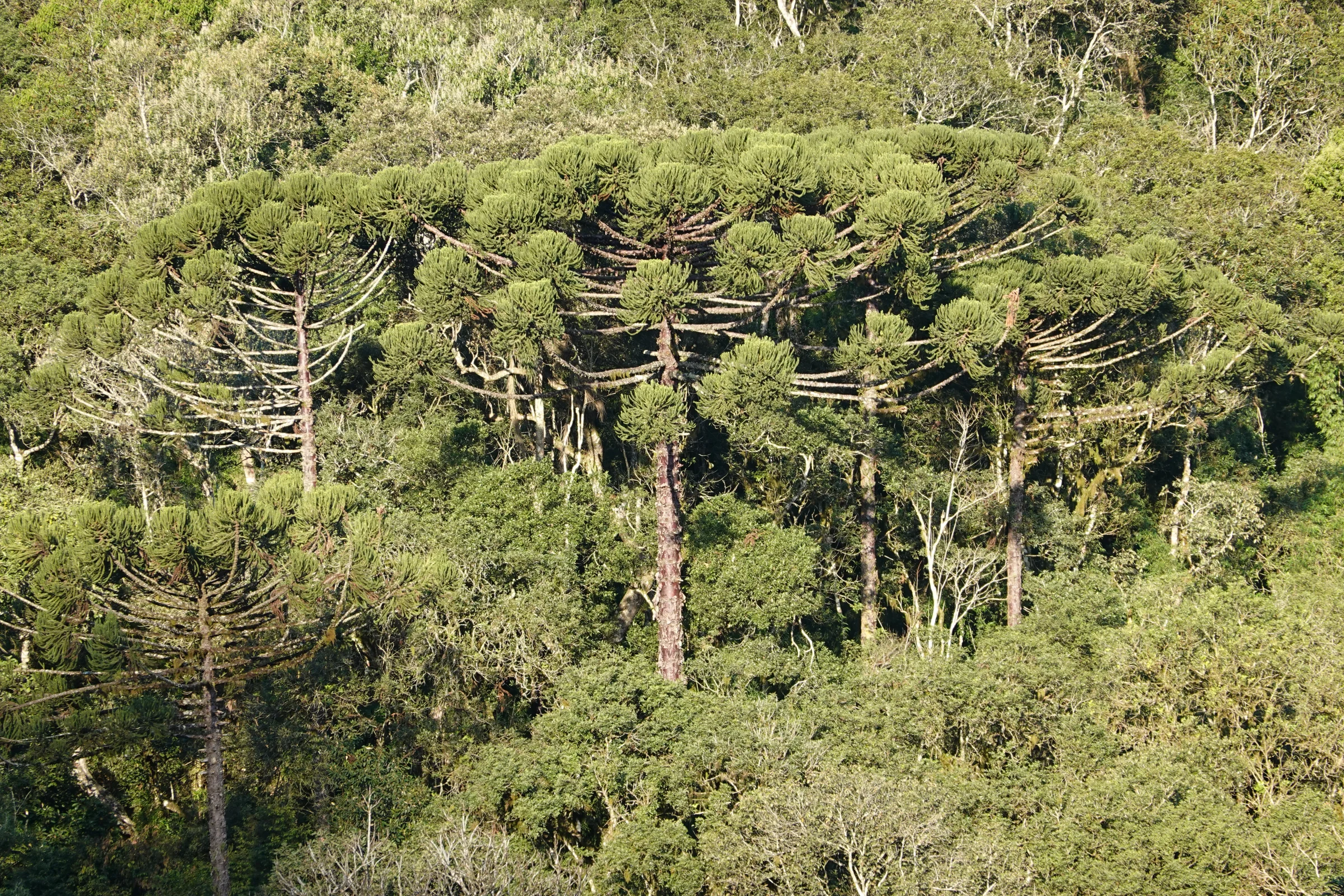
Symbol of the Mixed Ombrophilous Forest, Araucaria angustifolia is the tree that gives identity to the biome and to the Natural Reserve. Restoring it also means restoring biodiversity, water and the southern Brazilian landscape.
- <1%
- Of the original Araucaria Forest still preserved
- 664
- Grafted seedlings already planted
- 2,000
- Seedlings planned (goal)
- 8 years
- To the first commercial pine-nut harvest
A biodiversity hotspot
The Araucaria Forest once covered large areas of southern Brazil. Today, it survives in very small fragments — less than 1% of its original cover is estimated to remain in good condition. Even so, it is considered a global biodiversity hotspot, of strategic importance for the conservation of threatened species and for regional climate balance.
A standing forest is worth more than a fallen one
As Professor Flávio Zanette — a researcher with nearly four decades dedicated to Araucaria angustifolia — argues, valuing a standing forest depends on the sustainable use of its non-timber products, especially the pine nut (pinhão). That use adds value to the living tree, making it worth more standing than felled.
Araucarilândias
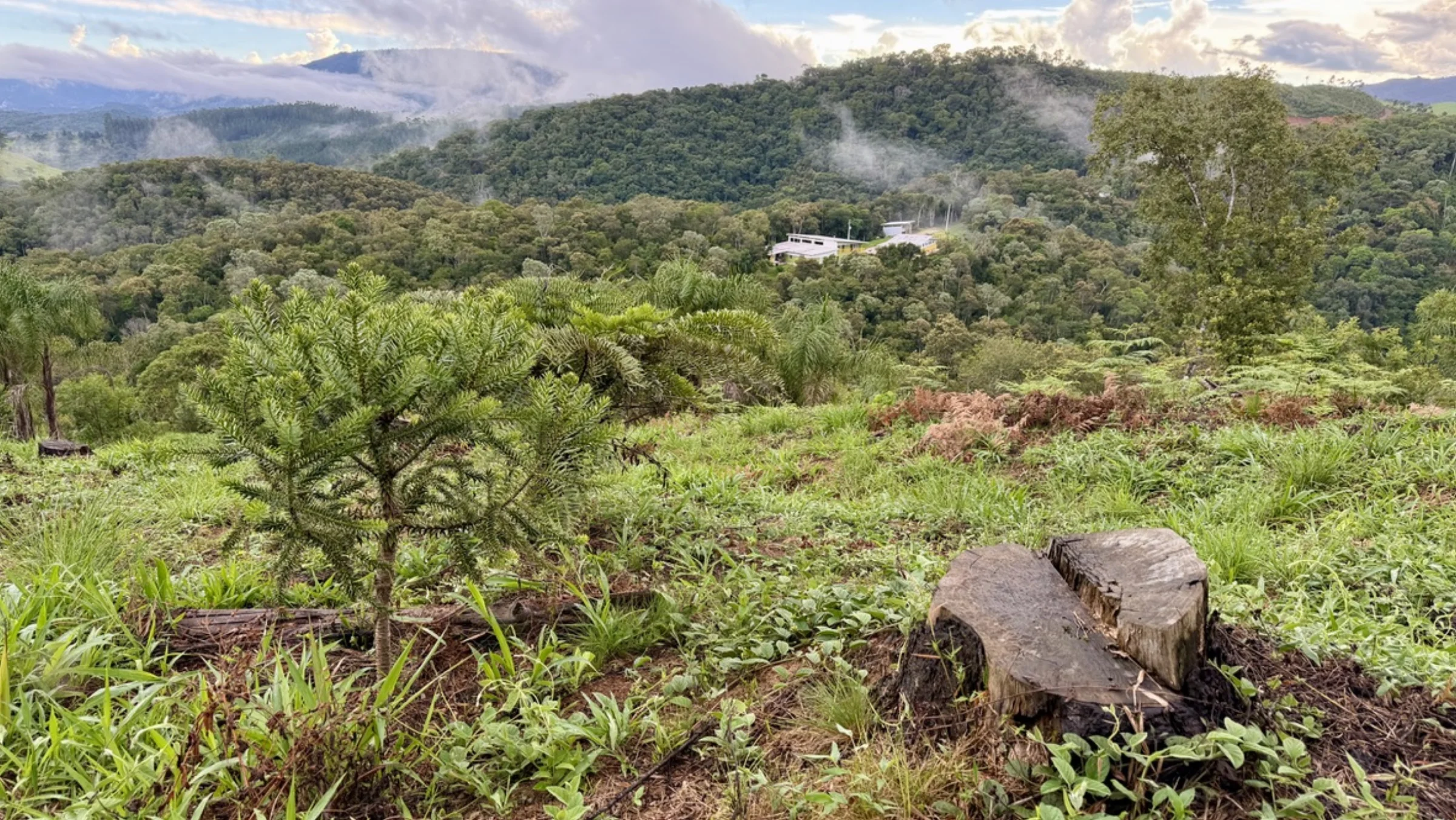
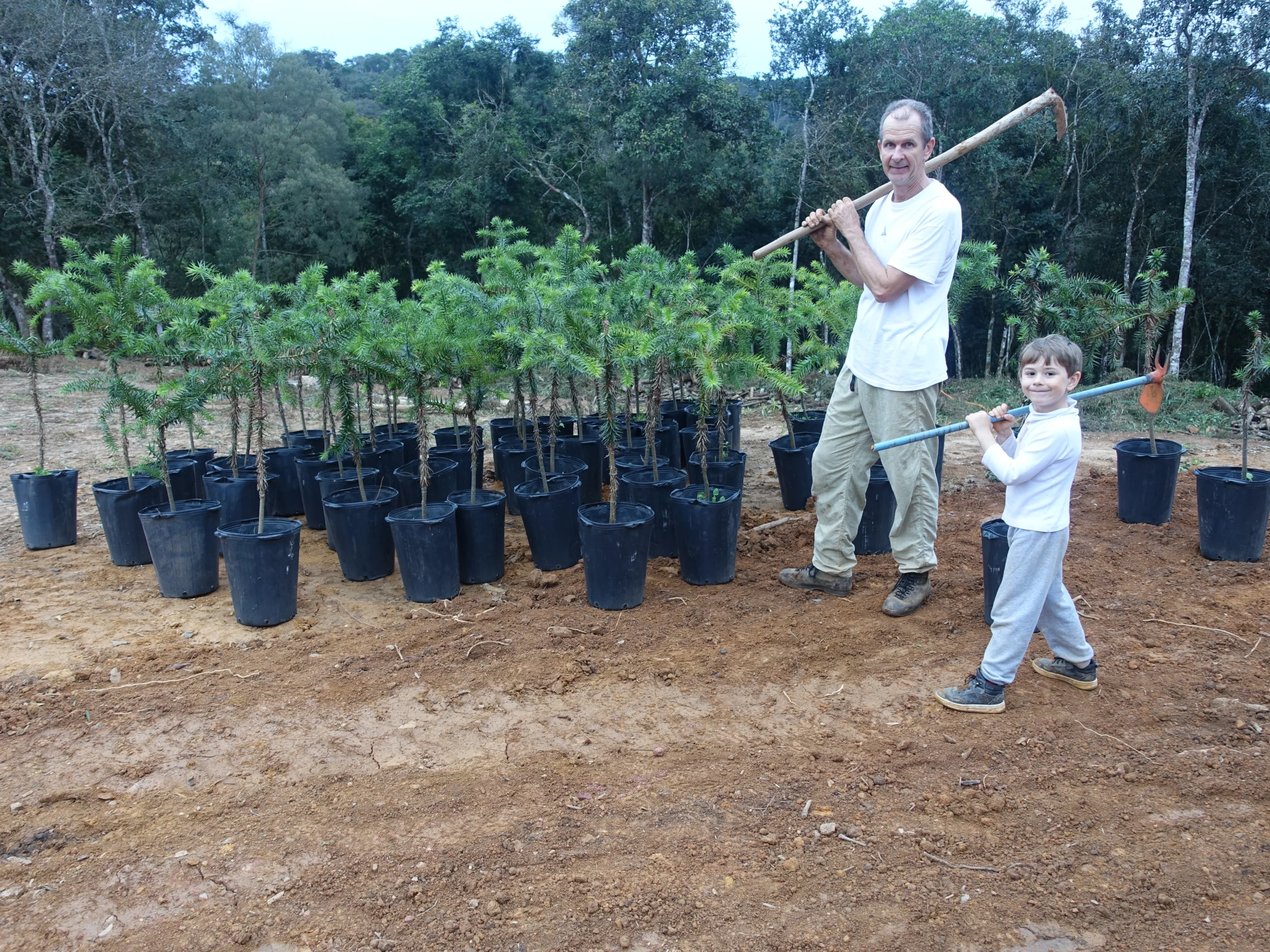
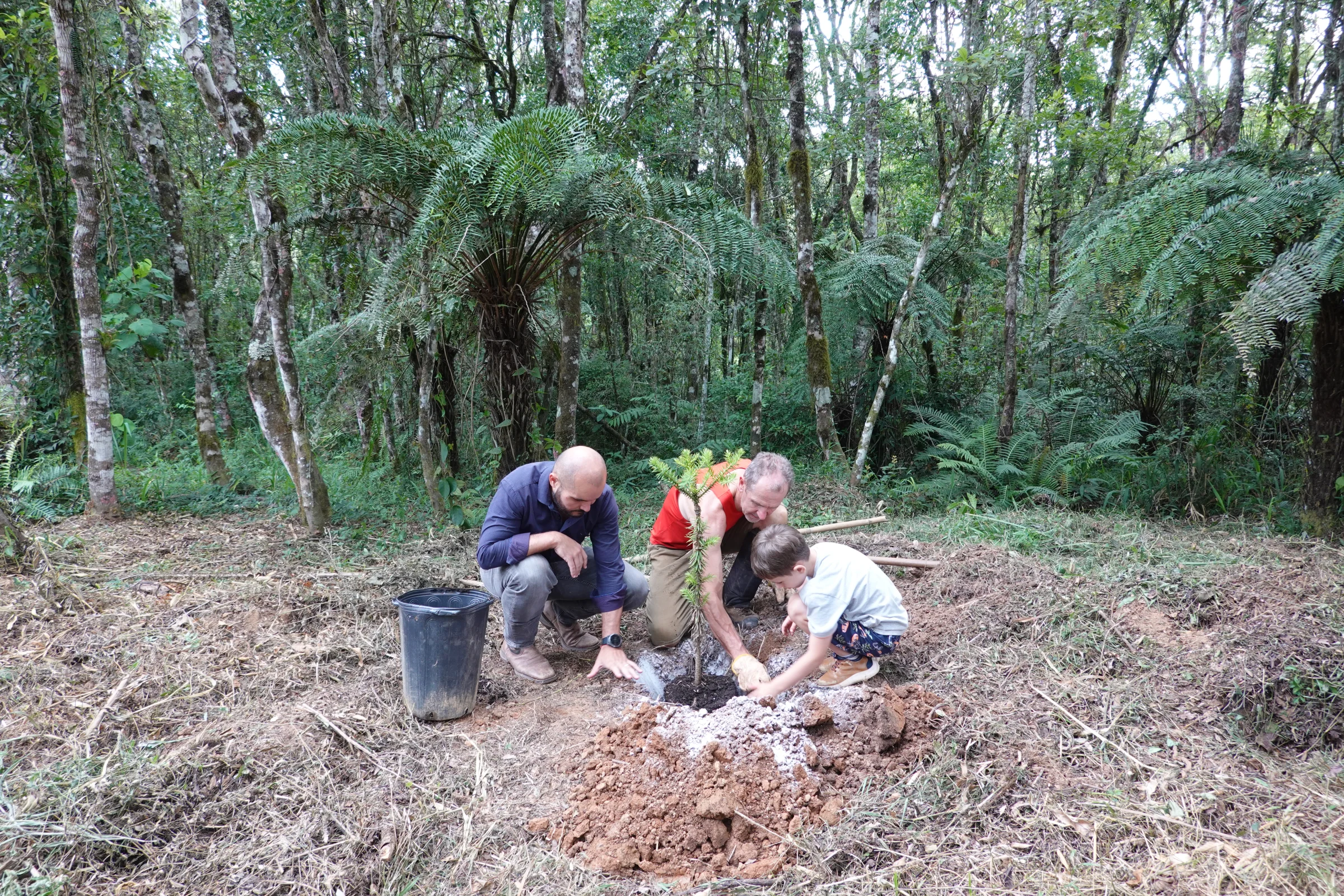
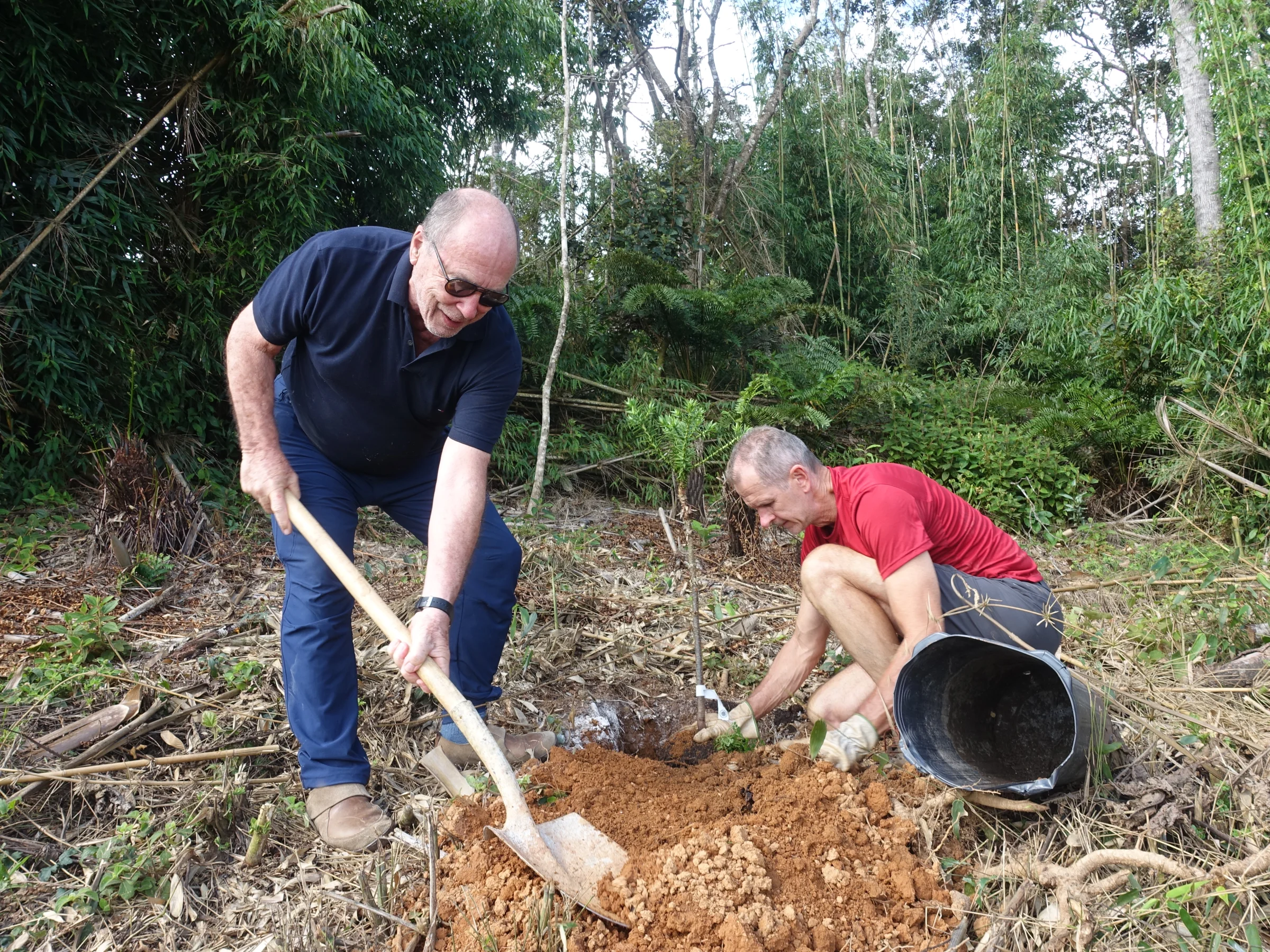
The name honors the historical work Araucarilândia, by German botanist Frederico Carlos Hoehne, who in the 1930s traveled through Paraná and Santa Catarina, fell in love with the Araucaria Forest and was struck by the devastation already underway. RNAWN's Araucarilândias are productive-restoration model nuclei: 2,000 grafted seedlings planted in planned nuclei, showing that income can be generated from a living forest — through pine nuts, pollination and ecosystem services.
The Natural Reserve plans to expand this action by distributing seedlings to neighboring rural properties, encouraging new Araucarilândias to take shape across the region.
Project images
Get in touch with the Natural Reserve
Ask questions, schedule a visit, explore partnerships or order from the shop.